
interviews
All partners speaking.
Five years of Bunchmark in six interviews:
Just before the formation of the limited liability company, I, Marieke, joined as its first employee. The team then consisted of seven partners and myself, their “Bunch Officer. My role and our future was something we were going to figure out together. That a lot has changed in those five years is putting it mildly.
In my new position as a marketing and communications consultant, and as a voyeur of the first hour, it felt like my responsibility to look back with the partners. Separately, in the sneaky hope of uncovering some interesting discrepancies. Alas, I came home cold. Because although I wrote down six different stories, the gist of each interview was virtually the same:
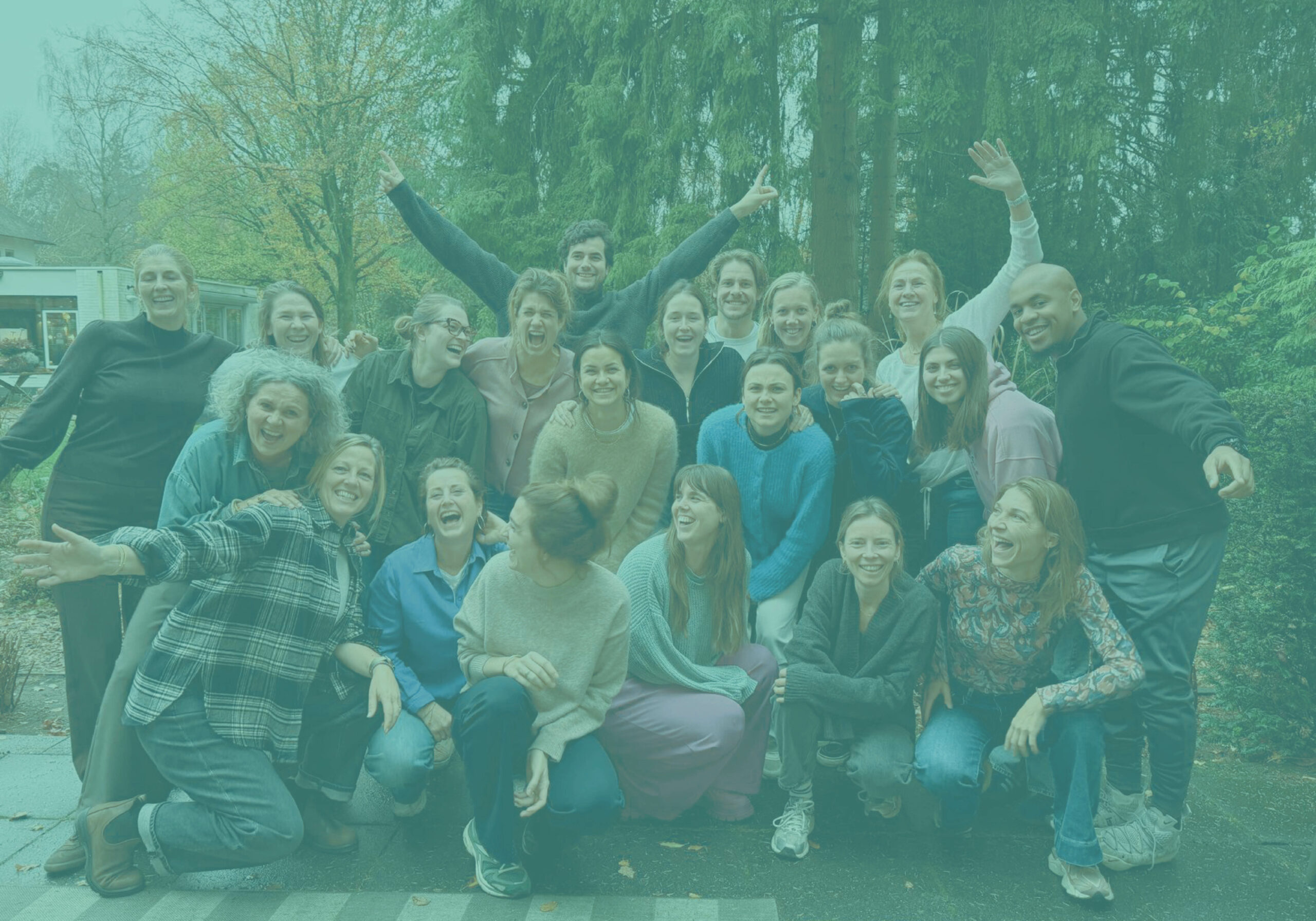
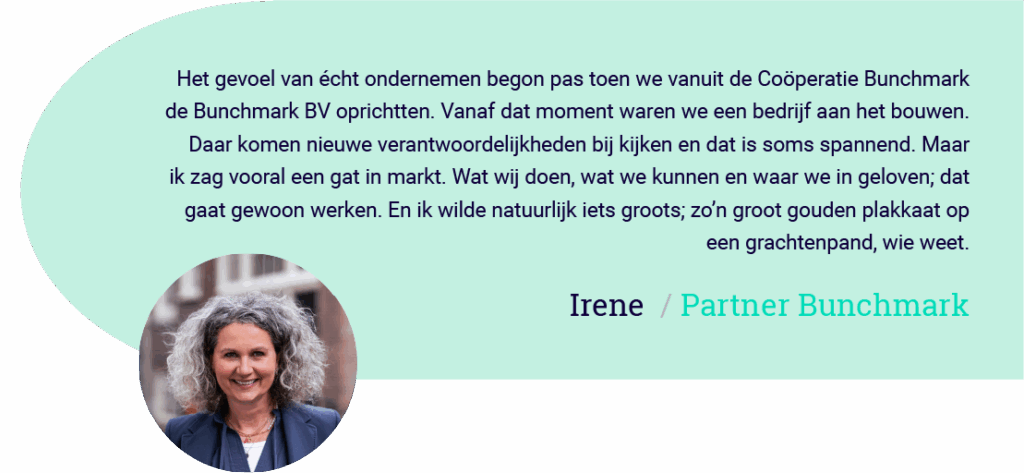
Bunchmark was founded on the belief that we can make a real difference within organizations through customization and quality. The growth we have experienced has never felt forced, because growth in itself was never the goal. Helping more and more beautiful organizations, with a team we are very proud of and learn from every day, is.
In addition, I can conclude that all of Bunchmark’s founders are a little (or a lot) stubborn. Fortunately, because if they weren’t, Bunchmark would never have seen the light of day. Each and every one of them had quit their regular jobs some time ago to become self-employed; less dependent on the whims of an organization and with more freedom to set their own course. In this they have found each other. Because the same goes for all of them: together is better than alone.
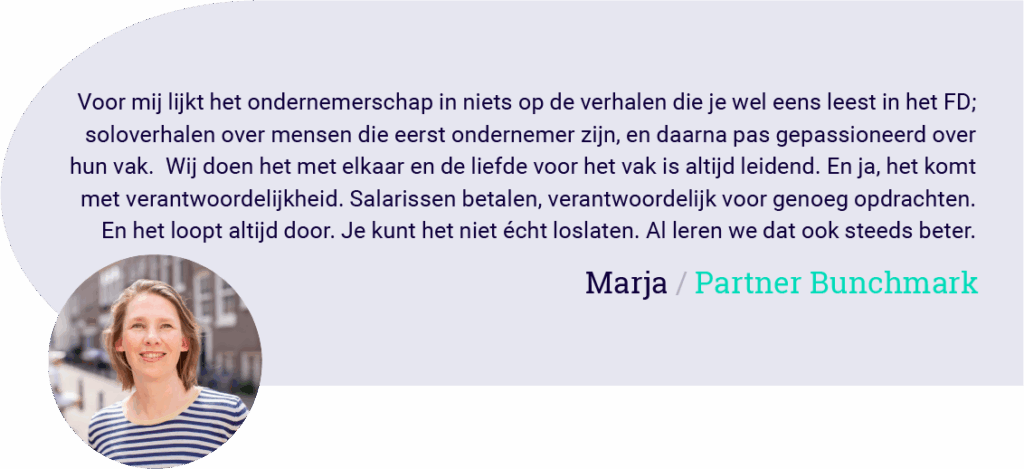
There were prejudices and some skeptics here and there (including husbands) who did not always hide their opinions. Six women at the helm, without much experience in building and leading an organization . Gaat that right? Yes. The question “how then?” again came the same answer six times: by trusting each other, listening to each other and, yes, sometimes taking a long time to make decisions. Looking for compromises. In the beginning, perhaps too much.
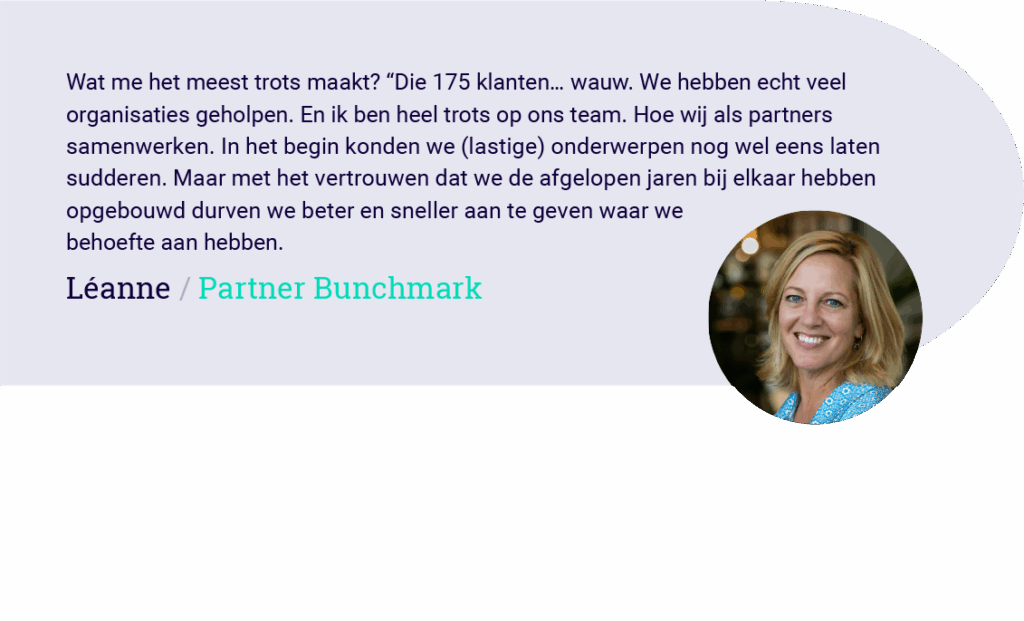
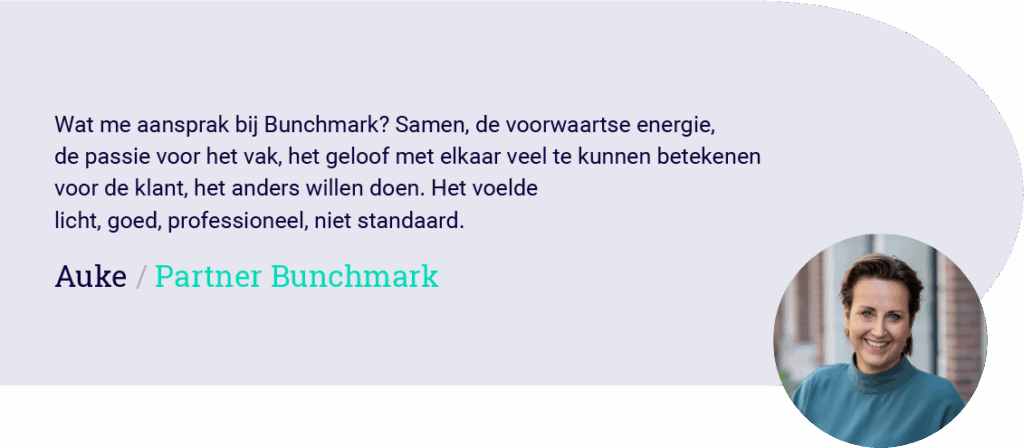
I too see it: growth. Not only in the number of employees, clients and the amount of sandwiches consumed at lunch, but in professionalism, leadership, entrepreneurship and on a personal level. We are a real company, where for the partners the balance between client work and building Bunchmark always remains a challenge, but where they also consciously make room for the younger generation, new ideas and technology. An associate A.I..
As an employee of the first hour, I dare say that perhaps that is where the real strength of these six partners at the helm lies: no egos, but six women who enjoy their work and entrepreneurship. Not into playing the boss, but conveying their passion for the business. Taking a step back without difficulty when someone else deserves the space, and always open to new ideas. The biggest example of this remains my own emigration to France. I wanted to leave the Netherlands AND I wanted to continue working for Bunchmark. I’m sure at most organizations that wouldn’t even be negotiable. At Bunchmark, I was told: ‘Exciting, let’s see if it works!’ That was three years ago now. And óf it worked out.
When I have the partners look ahead five years, they are unanimous about Bunchmark: doubling the number of employees, lots of great clients and the agency you call for all your people, culture and structure issues.
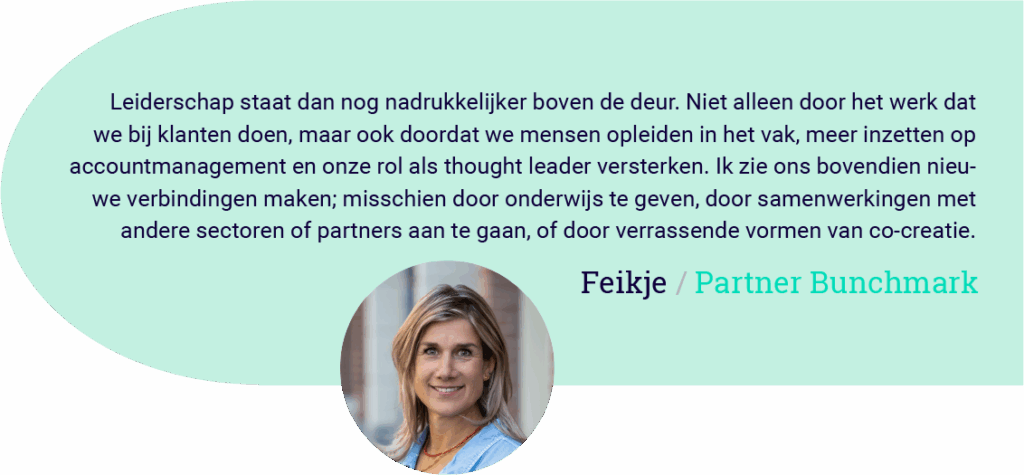
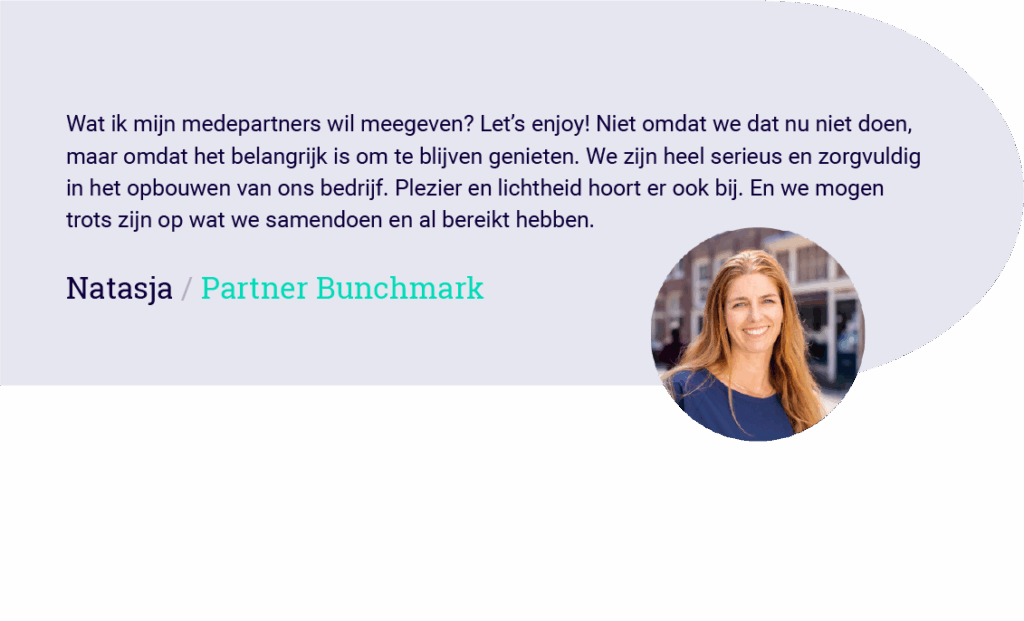
To conclude my interview, I ask all the partners for a message to their co-founders. Not everyone keeps it dry – which in turn moves me immensely. I spoke with six women who do so much for each other that they sometimes forget to enjoy themselves. They wish each other more fun, the light-heartedness that makes work not feel like work. And I grant them that too: pleasure. Thus the circle is complete.
Let’s build a playground for all people to sparkle at work.